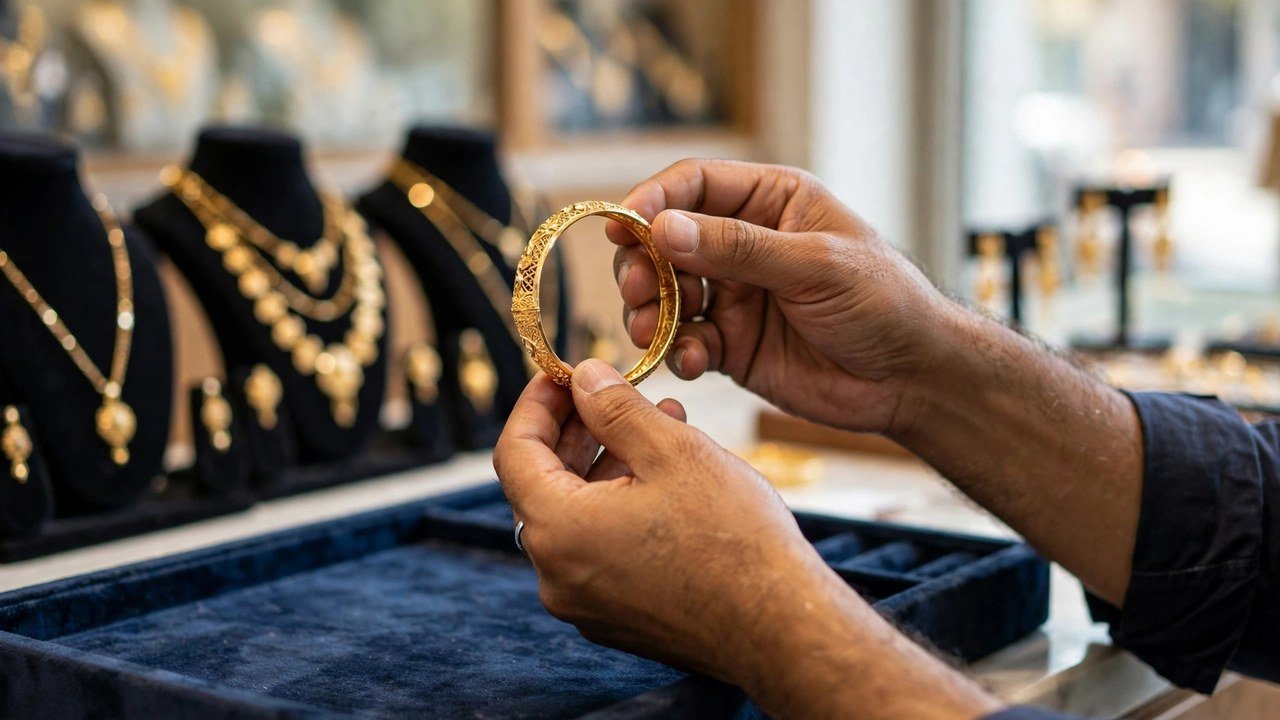
Buying gold is a big decision for most families in Pakistan. A ring, a bangle or a small bar can cost a lot of money, and once you have paid, it is hard to undo the deal. The good news is that you do not need to be an expert to protect yourself. A few simple checks, done calmly before you pay, can save you from fake or low-purity gold.
This guide explains those checks in plain words. It does not replace a jeweller’s test, but it will help you ask the right questions and spot a bad deal early.
Start With the Shop, Not the Piece
The safest first step is to buy from a shop you know, or a shop with a clear name, a proper address and a good reputation in your area. Ask family or friends where they bought their gold. A shop that has been in the same place for years, gives proper receipts and answers questions openly is usually a safer choice than a stranger offering a very low price in a hurry.
Be careful if a seller rushes you. Phrases like “buy now or the price will go up” or “this is a special deal only for today” are meant to stop you from thinking. A genuine shop will let you check the weight, read the receipt and even come back the next day. If you feel rushed, walk away. There will always be another piece.
The Price Test: If It Is Far Too Low, Stop
Gold has a market price every day. You can check today’s rate on this site’s homepage before you leave home, and use the Gold Calculator to work out roughly what a piece should cost for its weight and karat.
If a shop offers gold far below the day’s rate, that is a warning sign, not a bargain. Real gold cannot honestly be sold far below market value, because the shop itself paid the market price for it. A small difference is normal, because shops add making charges and their own margin. A huge discount is not normal. Ask yourself: why would anyone sell real gold for much less than it is worth?
Ask for the Karat in Writing
Karat tells you how much pure gold is in a piece. 24 karat is almost pure gold. 22 karat is the usual choice for traditional jewellery in Pakistan. 18 karat is used for modern jewellery that needs to hold its shape. You can read more about this in the purity guide on the homepage.
Before you pay, ask the shop to write three things on the receipt: the weight, the karat and the rate used for the calculation. Do not accept a receipt that only shows the total amount. A clear receipt protects you if you ever sell the piece, have it repaired or need to prove what you bought. Keep it safe at home, just like you would keep a property document.
Look for a Stamp, But Do Not Trust It Alone
Many gold pieces carry a small stamp or hallmark that shows the karat, such as 22K or 916. A stamp is a helpful clue, but it is not proof on its own, because a stamp can be copied. Use it together with the other checks in this guide, not instead of them.
Look at the piece closely in good light. Real gold jewellery usually has clean, even work. Rough edges, uneven colour, peeling or a dull, patchy surface can be signs of poor work or a coated base metal. If a piece feels unusually light for its size, ask the shop about it. Gold is a heavy metal, so a large piece that feels almost weightless deserves a question.
The Weight Check: Watch the Scale Yourself
Ask the shop to weigh the piece in front of you, on a scale you can see. Note the weight and check that it matches the weight written on the receipt. This sounds simple, but it is one of the most useful checks you can do, because the price of gold is worked out from its weight.
If the piece has stones, ask how the weight was worked out. Some shops weigh the whole piece, including stones, and charge the gold rate for the full weight. A fair shop will explain this clearly and, where possible, show the gold weight separately. If the answer is vague or the shop refuses to weigh the piece in front of you, do not buy.
Making Charges: Ask for the Figure Separately
Making charges are what a jeweller adds for turning raw gold into a finished piece. A simple band takes far less work than a detailed bridal set, so the charge is usually higher for intricate designs. Charges may be quoted as a fixed amount per gram, a percentage of the gold value, or a flat amount for the piece.
Always ask for making charges as a separate figure, not hidden inside the total. That way you can see how much of the bill is gold and how much is workmanship. You can also compare two or three shops for the same design, if you have time, because making charges can differ a lot from shop to shop.
Simple Home Checks: Useful, But Not Final
You may hear about home tests, such as checking with a magnet or looking at how the piece reacts to water. These tests can raise a question, but they cannot give a final answer. For example, gold is not magnetic, but many other metals are also not magnetic, so a magnet test alone proves very little. A home test should never replace a proper check by a trusted jeweller.
For a valuable piece, a trusted jeweller’s purity test is a sensible step before you pay. It takes only a few minutes, and a good shop will not be offended if you ask for it. If a seller refuses any kind of test, or will not give a proper receipt, walk away and ask another jeweller.
A Short Checklist Before You Pay
Use this list every time, even if you are in a hurry:
- Check today’s rate on the homepage before you leave home.
- Buy from a shop with a clear name, address and reputation.
- Ask for the weight, karat and rate in writing on the receipt.
- Watch the piece being weighed in front of you.
- Ask for making charges separately, not hidden in the total.
- Look for a stamp, but do not trust it alone.
- If the price is far below the day’s rate, stop and ask why.
- If anything feels rushed or unclear, walk away.
Gold buying should feel calm and clear. A good shop will welcome your questions, because a happy customer comes back. If a deal makes you feel unsure, that feeling itself is useful information. Trust it, take your time, and buy only when the piece, the price and the paperwork all make sense to you.
For today’s rates, start on the homepage. To work out what a piece should cost, use the Gold Calculator. To see how rates have moved over time, visit the Gold Price History page.